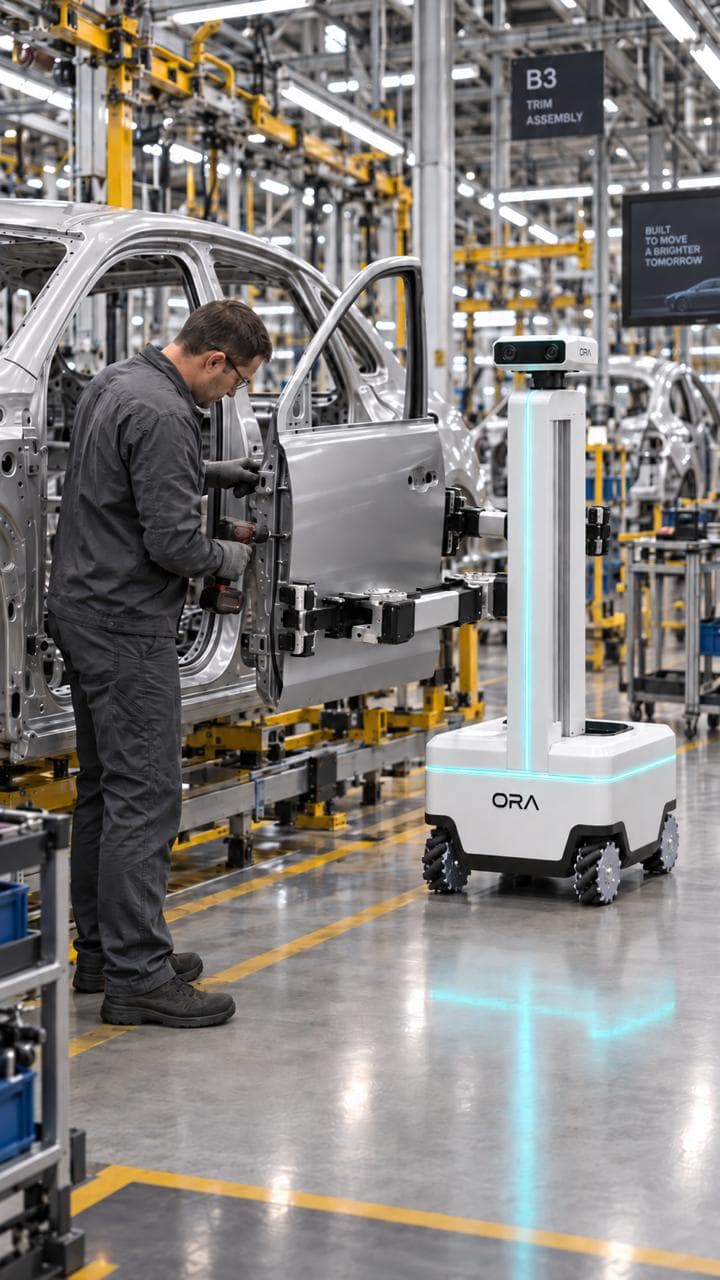
We build robots that leave the lab.
For a decade the world perfected the mind of the machine. We are building its body, and putting it to work on real sites today, not in a demo video.
A robot that can only work in a cage is not intelligent. Machines will earn their place among us the day they handle the unplanned: the misplaced part, the changed layout, the gesture nobody wrote down. That does not come from more code. It comes from doing the work.
Automation stopped where the real world starts.
Fixed robots pay off on one repetitive task, in one fixed layout, behind a fence. Everything messier, the trips, the kitting, the checks, still falls on people. Meanwhile general-purpose robots stay in research, because a demo is not a shift.
Send the robot to work before it is autonomous.
Our robots go on site from day one, piloted remotely by trained operators. The task gets done correctly immediately, and the robot becomes autonomous because it has been there, not because we waited for a better model.
The work itself is the training set.
Every hour under teleoperation records what the robot saw, what it did and how the operator handled it. Real lighting, real clutter, real surprises. Data no simulator produces, and no one else has.
A machine that is worth more each month.
Tasks move to autonomy one by one. Operators shift from piloting to supervision, cost per task falls, and the same robot takes on missions it was never programmed for.
A robot learns the way a person does.
By working.
The robot is the product. We own everything behind it.
Most robotics companies buy their training data, or generate it in simulation. We make ours. The capture hardware, the factory that runs it and the models it feeds are all in house, which is why our robots improve every week instead of every funding round.
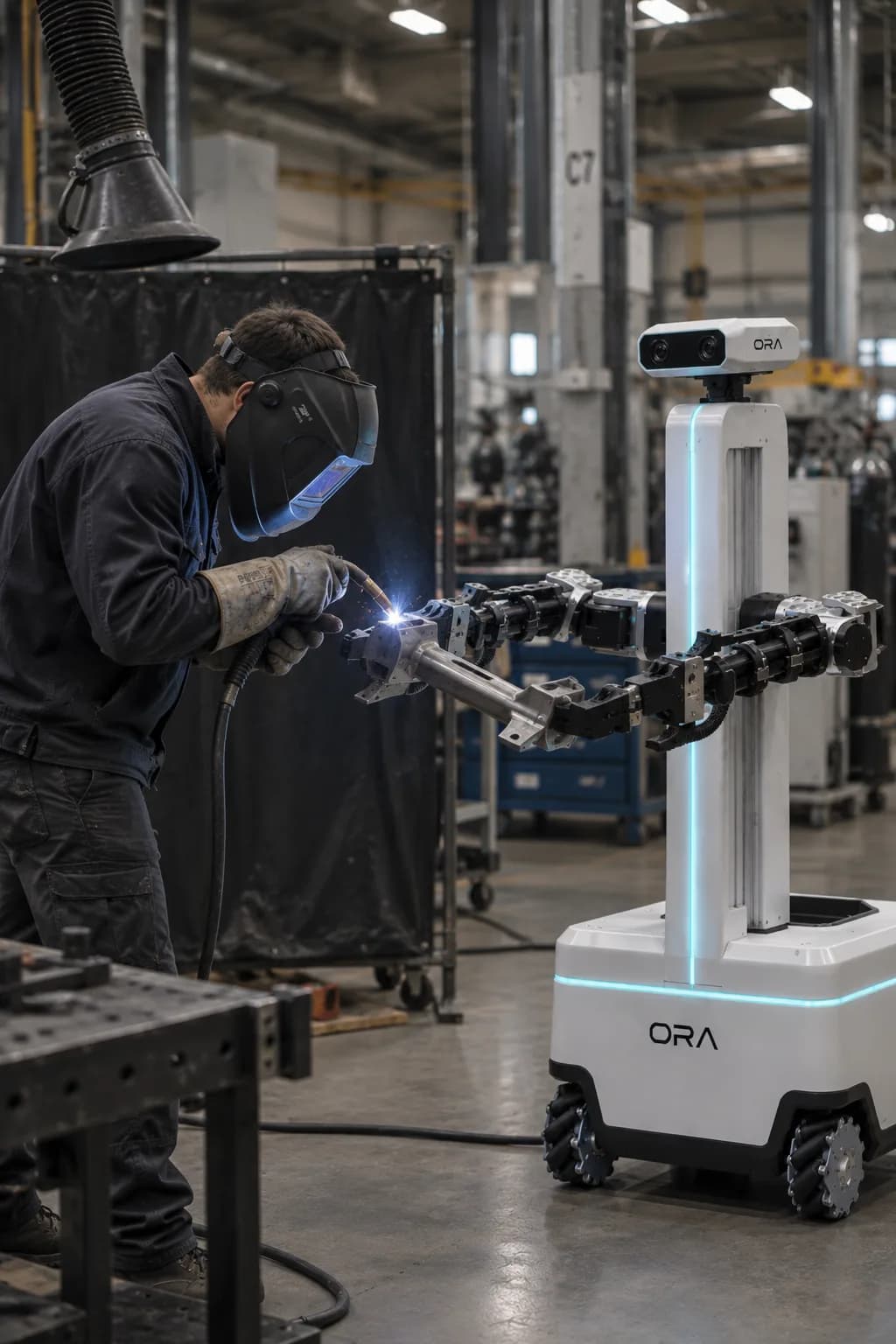
A visionary, a scientist and a builder, one conviction.
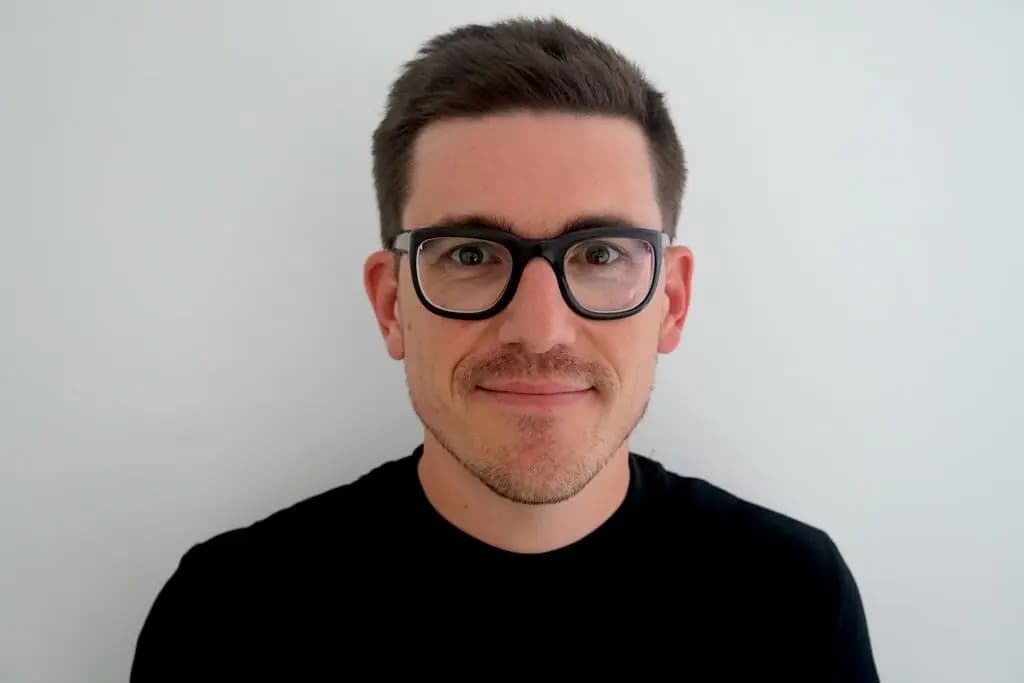
William Eldin
Co-founderA decade anticipating the rise of computer vision and real-time intelligence. Sets the strategic direction and the conviction that AI must augment humanity, not replace it.

Olivier Duchenne
Co-founderLeads the science. Formerly Head of Robotics at Mistral AI, he left to build Ora full-time. Builds our models from scratch, trained on our own real-world capture data, so the robot's intelligence is never a licence we depend on.

Jawad Wali
Co-founderLeads operations and field execution, turning robot deployment and real-world capture into a reproducible, industrial process built for scale.
Robots on every site where the work is still carried by hand.
More robots in the field, more missions per robot, and a compounding loop: every hour of real work makes the next model better and the next deployment faster. Built in Europe, with the data that powers it kept here.
Engineering Reality. Powering Intelligence.